.svg)

Have you ever considered what it would look like to double your production speed?
At first, this sounds like an empty billboard promise. However, adjusting your production method to handle higher volumes can yield drastic results.
Over 40 years, Strouse has helped many customers optimize their manufacturing assemblies for speed, accuracy, and quality by using die cut components.
Let’s explore how high-volume die cutting could have a significant impact on your bottom line.
What We Mean by ‘High Volume Die Cutting’
Die cutting can be industrialized the same way sewing can; that is, although your mom may have her own die cutting clicker for scrapbooking projects, she still has an astronomically lower capacity than a converter.
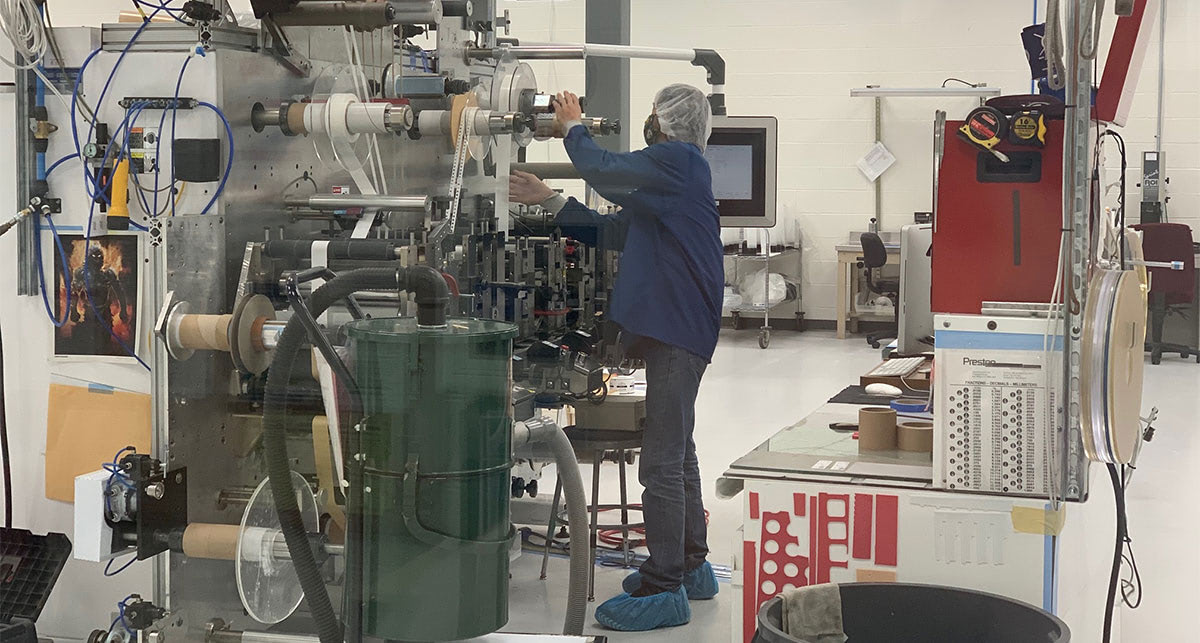
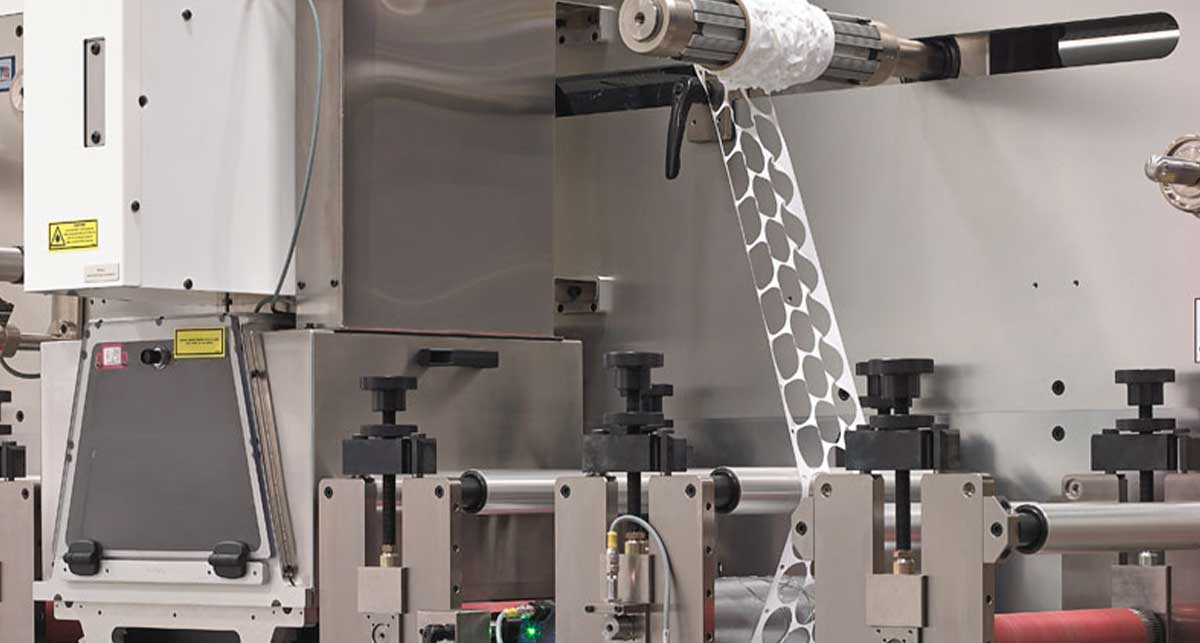
Converters like Strouse produce millions of die cut parts daily, often switching between die cutting methods to achieve the best results.
What Does Manufacturing Look Like With and Without Die Cutting?
Companies that don’t use die cutting often use manual or semi-manual methods. For example, a clicker press is a semi-manual, hand-operated machine that punches out shapes from materials, which is more labor-intensive and slower than automated die cutting.
CASE STUDY: DIE CUT MASKING PRODUCTS
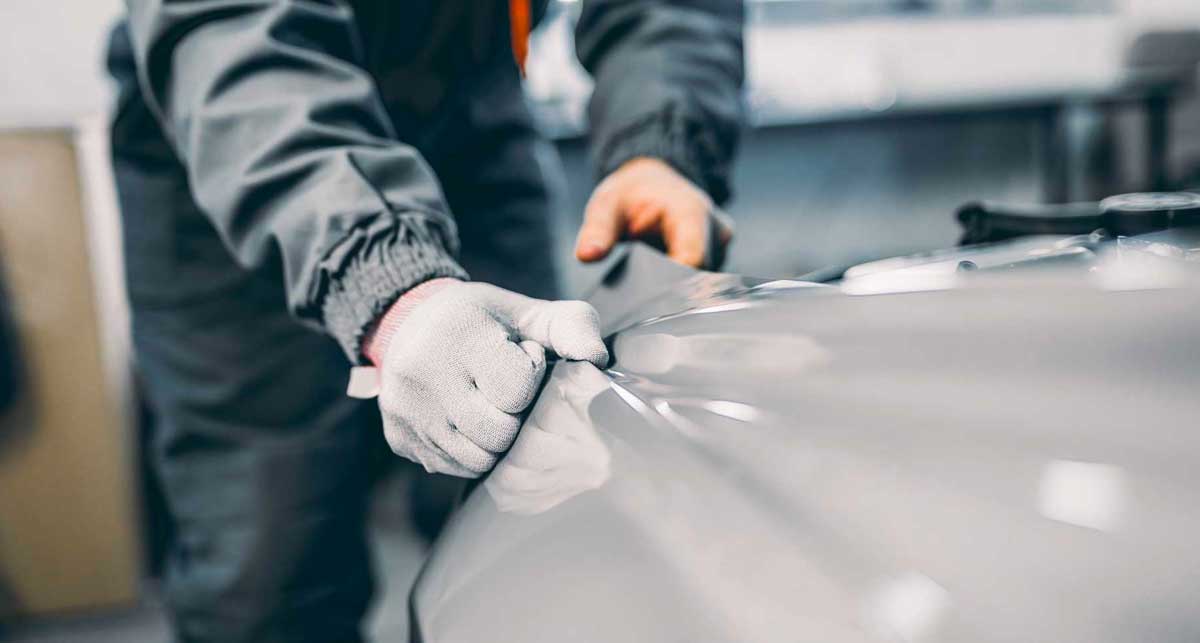
The new masking solution made the application process far quicker and simpler.
1. WITHOUT DIE CUT PARTS
Initially, Letterkenny Army Depot could refurbish no more than 10 vehicles per day due to a manual masking process that slowed down painting.
2. WITH DIE CUT PARTS
Implementing Strouse’s die cut solution doubled production to 23 Humvees per day.
Strouse engineers designed a custom masking kit for the Humvees, including parts for windshields, turn signals, headlights, motor masks, tire bags, and wiring harness shields. Engineers also added pull tabs for faster application and clean removal, leaving no residue.
Letterkenny and other depots adopted this application method, earning a Shingo Prize for better speed to the field.
What Factors Drive Die Cutting Costs?
.png?width=500&height=500&name=what%20drives%20die%20cutting%20costs%20(5).png)
Buyers and converters can leverage multiple factors to influence the final cost.
a) TOOLING
Die cuts require hard tooling that can cost anywhere from $200 to over $10,000 per die, depending on your design’s size, shape, and production requirements.
b) LABOR
Labor typically represents 20-30% of the final converting estimate. For Strouse, this includes machine set-up, testing, production, and breakdown, which remain relatively constant as order quantities increase, lowering the price per part.
c) MATERIAL SELECTION
Material typically accounts for 70-80% of the total cost in die cutting orders.
When selecting materials, businesses must consider both the material cost and manufacturing complexity. Factors like elasticity and thickness can complicate the manufacturing process, leading to greater material waste during setup.
Finally, different materials have different volumetric purchasing requirements, which we will discuss in the next section.

d) PRODUCTION VOLUME
One of the biggest ways businesses leverage volume to lower die cut costs is by placing high-volume orders that offset the fixed costs of tooling and labor.
- Tooling is often a one-time purchase, and in most cases, Strouse covers retooling (tool sharpening) as well.
- The labor cost to assemble, operate, and disassemble a machine press stays relatively constant regardless of order quantity.
Given that tooling and labor stay constant, adjusting your volume has the greatest impact on costs. Both customer demand and material order quantities determine production volume.
Certain purchase thresholds unlock better deals with material suppliers, which is why many converters will quote multiple quantities to demonstrate the per-part cost savings of higher volume orders. As a project becomes more stable, customers often place stock orders to achieve the same goal.
e) TOLERANCES & PART GEOMETRY
Part geometry is a surprisingly overlooked aspect of converting, but it can significantly impact production costs; that’s why engineers often operate under the principles of Design For Manufacturability.
DFM ensures designs are only as complicated as necessary, whether that means adjusting features, tolerances, or other aspects that could affect your product’s outcome.
f) QUALITY, ENGINEERING & INSPECTION
Design tolerances define the acceptable range of deviation for your part measurements. Certain parts have stricter tolerances that require closer inspection with cameras and other technologies, which increases your final cost.
Tight tolerances can also increase your process complexity, tooling costs, and material waste.
How Die Cutting Reduces Costs
✔️ Increased application speed
✔️ Fewer production steps
✔️ Reduced labor requirements
✔️ Less material waste
✔️ Improved consistency & fewer defects
✔️ Better scalability at higher volumes
Manufacturers use die cutting to rapidly produce identical parts at low per-part prices on a larger scale.
Furthermore, advanced press setups integrate multiple steps, such as slitting, printing, lamination, and die cutting, to create a cost-saving one-pass production process.
When Die Cutting Does NOT Reduce Costs
Although die cutting has many advantages, at a high level, it may not always be the best production method for your existing process or future goals.
i. VERY LOW PRODUCTION VOLUMES
Aside from flexible die tools, which cost less but wear down quickly, the costs of tooling and press assembly may make die cutting an uneconomical option for low production volumes.
WHAT IF YOU NEED PROTOTYPES IN LOW QUANTITIES?
Many converters offer sample or trial quantities for lower volumes to help businesses get their projects off the ground. These rapid-prototyping methods often use laser and digital die cutting, which do not require the purchase of hard tooling, and are therefore cost-efficient options for lower-volume projects.
ii. DYNAMIC PROTOTYPING STAGES
If you are still testing designs, we recommend holding off on full-scale die cutting.
Once you’ve purchased hard tooling, it can be challenging and expensive to change designs and materials (which is common in early product development). Methods such as flat-bed laser or digital cutting don’t use hard tooling, allowing you to make prototype design adjustments.
Even if you have low volumes or are still in the prototyping phase, it’s still a good time to reach out to a converter in preparation for your future growth.
Are Die Cuts the Right Choice For Your Process?
To determine whether die cuts suit your project, review the following questions:
|
DOES DIE CUTTING SUIT YOUR PROJECT? |
✔️/✖️ |
|
|
1. |
Are you producing parts at a moderate to high volume? |
|
|
2. |
Is your assembly process manual or inconsistent? |
|
|
3. |
Are you using multiple components that could be combined? |
|
|
4. |
Do you pay multiple manufacturers for slitting, cutting, printing, packaging, etc.? |
|
|
5. |
Are you noticing high labor or material waste costs? |
|
Not every project is right for die cutting; however, if you answered yes to any of the questions above, we strongly recommend reaching out to a converter.
At Strouse, our focus is on creating sophisticated manufacturing processes to build high-quality, functional parts.

For more information about our capabilities and past projects, visit our Learning Center.