

Skip to content
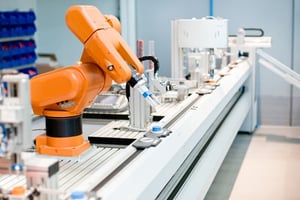
robotic-machinery-on-assembly-lines-can-be-used-for-precise-and-cost-effective-fluid-and-adhesive-dispensing-14098020

Automated Assembly

Accurate and repeatable assembly

Assemble Critical Adhesive Applications

Assembling products with die cut components can be challenging, especially when component placement has critical tolerances that affect performance and durability. Strouse’s partnerships enable us to help you achieve your desired level of adhesive assembly automation.

Your Die Cut Components Affect the Automation Process

If a die cut component’s dimensions, positioning, or behavior are too inconsistent, an automated system may struggle to pick it up and place it consistently, causing:

  1. Missed pick-ups
  2. Misaligned parts
  3. Damaged components
  4. Material waste
  5. Machine downtime

Robots perform repetitive tasks with little room for variation; therefore, automating your process will reduce the acceptable margin of error for converted components.

Automation Guide For Converting     Request a Quote

pick and place automation for die cuts

Your Die Cut Components Affect the Automation Process

Many automation issues can be traced back to design and performance flaws that led to non-functional parts.

Automation Issue

Key Cause

Material Behavior and Deformities

Thicker foams, transfer adhesives, and other materials deform more easily.

Release Liners

Picking a release liner with too much force will result in the automation equipment struggling to separate the part from the liner; too little force and the parts will lose adhesion and scatter during handling and transportation

Positioning and Registration

Inconsistent converting performance, tolerances, and quality control will result in parts that are incorrectly positioned, oriented, or marked for registration.

automated assembly cobots

What Level of Automation Do You Require?

Your production goals ultimately determine the level of automation you need. However, to find the correct level of automation for your project, you can consider the following factors:

Converting Volume

Suggested Level of Automation

Low volumes (generally 10s to low 1,000s)

Potentially none—low volumes might not offer cost savings that warrant the time and resource devotion required for automation.

Medium volumes (generally high 1,000s to low 100,000s)

You may save money by incorporating a fixture, jig, or other semi-automated process into your assembly. In the far future, ROI for a fully automated solution could exist.

High volumes (generally high 100,000s and up)

Full automation is a potential option from the get-go, especially if there is a clear future (such as a 5+ year contract). These projects typically have a clear value outlined and a relatively quick ROI.

NOTE: The first two years of business exist in a “low-volume” tier, yet you may have concrete plans to ramp up to volumes in the “medium” or “high” tiers. If this applies to your project, start considering automation for design/production, regardless of whether the current case warrants it.


automated placement

Part Complexity

Automation Expectations

Relatively simple design or assembly process

Simple processes are much easier and less expensive to automate. Because there might already be equipment on the market designed for this, the cost of entry is somewhat well known. Semi-automated and fully automated assembly have a higher likelihood of fit.

Complex design or assembly process

Complex designs are much more challenging and expensive to automate. The necessary equipment might not be available on the market, meaning not only will the associated development costs be far higher, but the level of upfront investment will also be fairly unknown.

“Strouse does an amazing job of listening to the needs of the customer and verbally communicating those needs back to the customer. Then they follow-up with a written quote and drawing to finalize the project.”
zHuyOMvR_400x400
DanEllsworth Adhesives

CONNECT WITH ONE OF OUR TERRITORY MANAGERS

Discuss a custom solution today.

Frequently Asked Questions

Here are the answers to the questions that people commonly ask.

What are the advantages of automated assembly?
  • Innovate manufacturing processes without investing significant capital and resources
  • Consolidate vendor relations with a single source for adhesive and automated equipment
  • Streamline development of critical components by planning for automation from the onset
  • Increase speed-to-market with a cohesive component development and automation process
  • Cost-effectively scale manufacturing
  • Enhance accuracy and repeatability of assembly
Who does strouse work with for machine automation?

Similar to our partnerships with material vendors, Strouse maintains numerous automation partnerships to match specific project needs.


How Does Project Scaling Affect My Price? Scaling a die cutting and/or automation project to higher volumes spreads fixed costs, such as tooling and setup, across more parts, significantly lowering the per-unit price. Smaller runs tend to have higher per-unit costs because the same fixed expenses are divided among fewer units.
How Do You Get an Automation Project Off the Ground? Starting an automation project typically requires component specifications, target quantity, and any relevant tolerance or performance requirements. Strouse works with customers early in the process to review designs for manufacturability and cost efficiency.

Optimizing Your Product For Assembly Line Automation

Automated assembly lines allow companies to scale up production and reduce per-unit costs.

Read more

When and How Should You Automate Your Assembly Process?

The term “automation” may refer to anything from a single dispenser machine to 150+ dispensers in a complex line

Read more

Common Mistakes in Automating Your Manufacturing

By reviewing the mistakes we see most often in automated manufacturing, you’ll be able to evaluate where you’re currently at, who you’re working with, and what your next steps are moving forward as you continue to integrate automation with your current planning process.

Read more

How Die Cut Adhesive Tape Can Improve Production

If your current assembly method is outdated, experiencing quality issues, or open to improvement, then die cut adhesives are an excellent tool for advancing your current process.

Read more

Best Ways to Assemble a Custom 96 Well Plate and Other Microplates

Well plates contain rows of parallel divots arranged in a grid of (usually) 96-well, 384-well, or 1536-well plates that can be filled with master mix and biological samples. Some plates also use channels and pumps to control liquid flow.

Read more

Strouse Allies with AccuPlace to Automate Adhesive Component Assembly

No longer will customers need to bring together an adhesive converter, an automation equipment vendor, and manage the relationships through the entire process to effectively scale manufacturing efforts.

Read more