Skip to content
die cut hydrogel cosmetics

Die Cut Hydrogel

Hydrogel Applications

Hydrogel is a specialized, flexible material composed of water. It comes in sheeted and liquid formats, but for die cutting, Strouse focuses on sheeted. 

Researchers, healthcare providers, farmers, and countless consumers use die cut hydrogels to create moist environments, facilitate conductivity in small devices, deliver drug solutions, and more. 

Packaging for shelf life     Request a Quote


  • Hygiene products
  • Cosmetics
  • Medical applications
    • Electrodes
    • Wound dressings (& smart wound dressings)
    • Eye patches
    • Silicone contact lenses
    • Burn bandages
    • Nerve guidance conduits
    • Drug delivery
  • Microfluidics
  • Agriculture

Hydrogel Die Cutting and Converting

Strouse has over 40 years of experience converting hydrogel, pressure-sensitive adhesives, and other flexible materials to custom sizes, shapes, and formats.

As a specialty adhesive tape converter, Strouse provides tape slit to custom widths or custom shapes and dimensions. Finished components can be provided in multiple formats including parts wound on a roll of liner, parts on single sheets of liner, or parts as individual pieces with liner on one or both sides to protect any potentially exposed adhesive. These formats are designed to simplify your assembly process.

Whether you apply hydrogel components by hand or use automated machinery, Strouse can design a solution that meets your functional needs while integrating with your existing processes.

We work on projects of all types from concepts drawn on a napkin to pre-designed components already spec'd into a project. Our diverse manufacturing capability allows us to provide you with the material you need in the exact size, shape, and format required for your design and process, while scaling for production in a cost-effective manner.

die cutting hydrogel
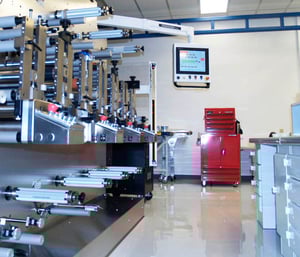
Using a rotary press to die cut hydrogel components.
hydrogel material
A member of Strouse's team shows off a sample sheet of adhesive hydrogel.
clean room laser cutting
One of Strouse's engineers is overseeing a clean room cutting project.

Top Medical Device Manufacturers Partner with Strouse

FREQUENTLY ASKED QUESTIONS

Hydrogel FAQ

Should I use hydrogel in my design?

Hydrogel is a material with highly specialized properties, so it isn't always the best, nor the cheapest option. However, if you're looking for a flexible, water-based material, then hydrogel could be right for you. 

If you're still unsure whether to use hydrogel in your design, contact Strouse today, and our material experts will help you find the right materials for your project. 

For those who are further along in the process, we'll even help you start prototyping your design to ensure that your materials function in context.  

Where can I find sheeted hydrogel? For personal use and individual rolls, you may want to begin with a retailer's website (such as Amazon). We recommend reaching out to a converter, like Strouse, once you're ready to begin building commercial designs. 
How can I cut hydrogel? Individual sheets of hydrogel are typically soft enough to cut with scissors. On a manufacturing scale, converting processes such as rotary die cutting will allow you to cut the same-sized parts consistently in larger quantities. 
What are the disadvantages of hydrogel?

Hydrogel tends to be more expensive than other flexible materials, and it can dry out if left unsealed. That's why hydrogel products utilize sealed packaging. 

Additionally, hydrogel is a challenging converting material that requires experienced hands to cut and process in larger quantities. When manufacturing hydrogel products, it is crucial to work with partners who have extensive experience working with it. 

capabilities_icon
MANY CAPABILITIES. ONE CONVERTER

possibilities_icon
IMPOSSIBLE
improvement_icon
130% PRODUCTION IMPROVEMENT
fit_icon
FIT. FORM. FUNCTION

What is Hydrogel, and How is it Used?

Would you ever put jelly on an open wound? What if I told you that jelly—more specifically, hydrogel (because yes, jelly is technically one)—is a common wound care solution?

Read more

Questions to Ask Before Using Die Cut Hydrogel

Hydrogel has helped us advance far beyond glass eye contacts, but despite its unique properties, it isn’t the right choice for every application.

Read more

Electrode Pads — Tips For Manufacturing and Design

Imagine if a doctor attempted to stick an electrode pad on you, only for it to sadly flutter down to the floor.

Read more

A Guide to Absorbent Wound Dressings

You're not alone if you’ve used a wound dressing that wasn’t designed to absorb the fluids from your wound properly.

Read more

4 Key Materials When Building Microfluidic Devices

What are the safest materials for constructing tiny devices to transport and protect blood or other fluid samples?

Read more

Microneedle Patches: Definition, Function, and Production

Can vaccines and other drug solutions be delivered without an intramuscular injection?

Read more

Best Medical Tapes for Sensitive Skin (Infant and Elderly)

You’ve designed the perfect medical product—that is, until I have to grease Granny to pull it off without tearing her skin...

Read more

Adhesive Island Wound Dressings: Full Guide

You might hear of “island” wound dressings and picture something a tad more tropical. However, these medical products are a valuable staple to proper wound care.

Read more

Top Trusted Hydrogel Manufacturers for High Quality Products

While it’d be nice if you could source massive logs of hydrogel from your local drugstore, it’s (understandably) not the most profitable business model.

Read more
If you have a question about a current project, or are using hydrogel to bring your product to market

Contact Us Today!