Microplate Sealing Solutions
Assemble and Seal Microplates Using Adhesives
Your research and testing rely on precision—why settle for imperfect well-plates? Strouse uses rapid prototyping, design engineering, adhesive converting, and automated microplate assembly to help other manufacturers build reliable diagnostic devices.


Why Do Microplates Need Sealing?
Many different types of microplates rely upon seals to produce accurate, conclusive results.
Cell & Tissue Cultures: Less Contamination, More Gas Exchange
In cell biology, contamination-free products are essential to obtaining accurate results. Active gas exchange (O₂ and CO₂) keeps living cells alive; however, cells also require strict protection against microbial contamination and media evaporation during long incubation periods.
ELISA Assays: Prevent Evaporation During Incubation
ELISAs are prone to evaporation from the outer-edge wells, also known as the "edge effect." During the multi-hour incubation in which antibodies bind their targets, evaporation may alter the reagent concentrations and testing accuracy.
BCA Assays: Ensuring Uniform Heating
Sealing films play a key role in fluid retention throughout testing and storage. BCAs often require higher-temperature plate incubation to accelerate chemical color reactions. Uneven heat or evaporation caused by poor seals could affect the resulting hues.
PCR & qPCR Assays: Secure Seals Through Every Cycle
Repeated cycles between extreme temperatures can cause weak adhesive seals to lift or leak, leading to evaporation and/or well-to-well contamination.
For Light-Sensitive Assays
Cell assays that emit light or use fluorescent dyes that degrade under regular light require stricter sealing and storage.
—and more!
Tapes, Films & Foils For Well-Plates
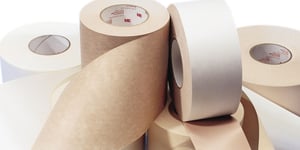
Every microplate application is unique — some require a durable, autoclavable seal that won't be broken, while others need a cover that can be peeled back. It's likely that you're searching for one or more of the following:
- Autoclave-Durable Tape
- qPCR/PCR Sealing Film
- Microplate Sealing Film or Cover
- Acid- or Alcohol-Resistant Adhesive
- Optically Clear Adhesive Tapes (OCAs)
Each product requires specialty materials, often medical-grade. To choose the right well plate adhesive, your converter will focus primarily on the specific application use case and your desired adhesive strength.

Microplate Quality Standards
- Medical grade adhesive sourcing
- ISO 9001:2015 and/or ISO 13485:2016 quality management systems
Strouse's Manufacturing Capabilities
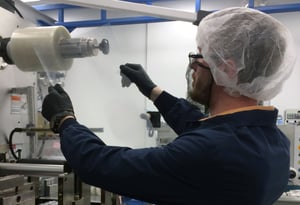
Our converter solutions are backed by an ISO 9001:2016 quality management system and an ISO 7 cleanroom, ensuring the cleanest manufacturing environment. We also offer:
✔️ Rotary and Flat Bed Die Cutting
✔️ Laser and Digital Tool-Free Cutting
✔️ ISO 7 Cleanroom Manufacturing
✔️ Flexographic and Digital Printing
✔️ Multilayer Adhesive Lamination
✔️ Automated Plate Assembly
Top Diagnostic Device Manufacturers Partner with Strouse