.svg)

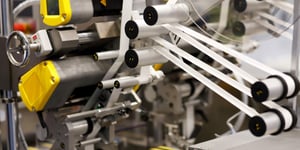
Automation is here, and if companies aren’t using it wisely, they are at a competitive disadvantage. However, automation isn’t an “all or nothing” decision; it's a range of options that suit your project.
As a 3M Preferred Converter, Strouse’s team has successfully integrated automation into its converting processes, delivering more than 5 billion units to Six Sigma quality standards.
This article will help you understand the different levels of assembly line automation and how to decide which one is right for you.
What is Assembly Line Automation and How Does it Work?
Assembly line automation is a series of programmed processes that fabricate a product.
Although manual labor is far from extinct today, automation has advanced significantly. The term “automation” may refer to anything from a single dispenser machine to 150+ dispensers in a complex line.
LEVELS OF AUTOMATION
If you pursue automation, you will eventually need to choose between multiple types.
i. SEMI-AUTOMATED PROCESSES
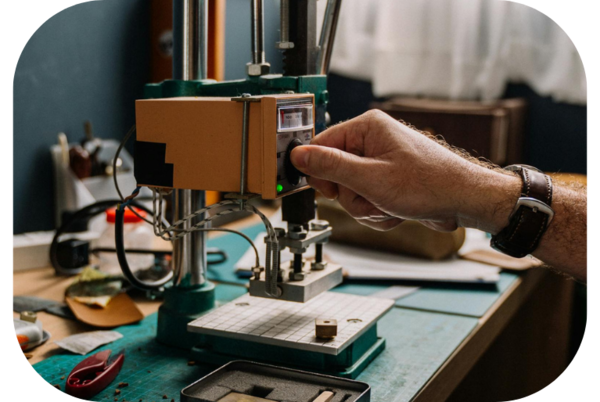
Many manufacturers combine manual application of product parts (manual manufacturing) with automated equipment to achieve a semi-automated process.
One example of a semi-automated process is having employees move parts from one stage to another in an assembly line.
Let’s use another example: A manufacturer needs to adhere their part to a simple piece of plastic. Unfortunately, the placement needs to be extremely accurate — even the smallest deviation causes the part to fail — so it can’t be done by hand. This process is a good candidate for semi-automation; a human could handle the initial setup, while the machine ensures high accuracy and repeatability during adhesion.

ii. FULLY-AUTOMATED PROCESSES
In fully automated (all-robot) manufacturing, the only human interaction within production processes could be loading input rolls and removing finished products. The rest of the process is all done by machines. This complex line needs to be foolproof before production begins; otherwise, it will stop, rendering the technology useless.
Humans physically cannot do certain things. Although we can perform many tasks, it’s not always to the accuracy needed for certain projects. Robotics is more accurate than a person can be, and sensors ensure precision in ways no human can. Plus, machines do it consistently.
A good example is microfluidic devices. Imagine a 20-layer lab-on-a-chip device. Volume may only be 10,000 per month (a number that’s a candidate for manual manufacturing), yet the pieces require incredible precision to assemble correctly. Automation is the ONLY way to go for products like these when large amounts of assembly are required, and repeatability is vital.
Choose the Correct Level of Automation For Your Process
Not all automated processes are created equal, and massive, synchronized robotic arms are more complex and costly than a simple pick-and-place process.
Automation can address a range of production challenges, so you may choose to implement it at multiple levels, depending on the question: What are you looking for from automation?
- Do you need to make more products?
- Make your products more accurately?
- Make your products more efficiently?
- Is reducing labor the goal?
Depending on the customer’s needs, the primary factors that drive an automation level include:
1. EVALUATE YOUR VOLUME
Scaling up to meet demand is no simple task. If a company has been manually assembling a product and needs to significantly increase production to a high volume, the initial reaction might be confusion, panic, and even a bit of fear.
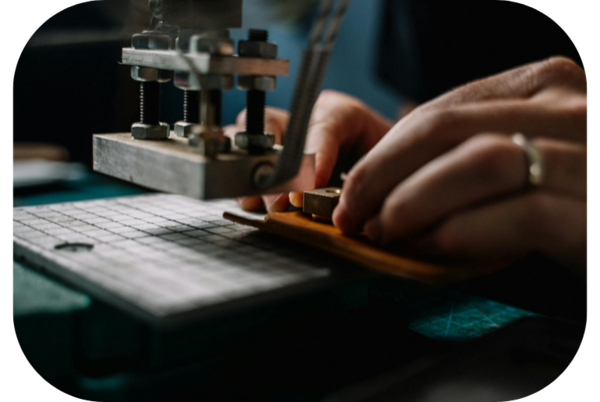
The level of gain may not justify the expense of automation in some instances, depending on the product.
- Firstly, how many units warrant automation — is it 10,000? 1 million?
- Secondly, you should treat a task that a person can accomplish manually in 3 seconds differently from one that takes 30 minutes.
A complete throughput/capacity/needs evaluation is required to determine the volume that triggers the use of automation, either semi- or full-automation. So, making 1,000 labor-intensive parts could be a great candidate for automation.
2. ESTABLISH A SET TIMELINE
The speed at which a product needs to be delivered can change everything. If it’s needed immediately, full automation is out the window because it usually takes at least 6 months to develop, build, and get a fully automated line up and running.
Here’s an example: A company wants to bring a part to market by year’s end. The product schedule needs to include designing a prototyped part (if it doesn’t already exist) to develop the machine and order it by a specific date to meet the launch.
Then you'll also need to design machinery and make 200,000 parts within the last 8 months of the year. You’ll be hard-pressed to meet that deadline with a fully automated line. However, you could get a semi-automated line up relatively quickly and start producing parts.
3. BUDGET FOR YOUR COST TARGET
Having a realistic budget is imperative to automation. A company may need to scale up to remain competitive, but this might be too expensive given the available labor.
As mentioned earlier, some manufacturers may already have the automation — a shiny, new machine. As a result, they’ll want to engineer the product around existing capabilities rather than designing it for automation (to make it in the most accurate and efficient manner). At times, this strategy may require a re-evaluation of the project.
When NOT to Use Automation
If your volume, timeline, or budget doesn’t support automation, you might need to hold off on the process. Product demand increases at different rates, and some products never reach the volume or precision that warrants automation.
Of course, if you know automation is guaranteed in your plans, you might want to discuss your design with a converter early on to ensure your materials and application method are conducive to automated processes once you reach that point.
What Will Automation Mean For Your Project?

To compete in U.S. manufacturing, most companies will implement some level of programmable automation. Yet, actually automating your existing process can feel like climbing a mountain.
Each task in a long assembly line requires a custom solution: A specific machine (a certain level of flexible automation) may need to be built to perform that exact task.
An experienced converter will work with an automation house to solve the problem and effectively integrate parts into the assembly line. For this reason, many manufacturers choose to outsource their designs to custom converters such as Strouse.
WHERE DO CONVERTERS SERVE YOU?
Converting partners help coordinate the factors that determine your automation level, including volume, timeline expectations, and budget, from the very beginning. All of these factors must be handled with the big picture in mind to ensure that you receive a functional solution.
Admittedly, some converters aren’t able to consistently produce products that meet specifications. Expensive automation — a high-end piece of equipment — is useless when the line shuts down due to poor quality.
True dedication to performance (accuracy and repeatability) sets some converters apart, so no matter the industry or level of automation required, the right converter can handle it.

Leaning on the experience and expertise of the right converter can take you far. If you’re interested in solving problems through automation, start a discussion with us today.
And if you have any questions, please feel free to reach out or look for the answer in our Learning Center.
Originally published: March 22, 2024
%20avatar.jpg?width=290&name=scott%20(1)%20avatar.jpg)