.svg)

.jpeg?width=300&name=AdobeStock_188763109%20(1).jpeg)
In a lab setting, defective tests cause delays, yield false results, and even generate unnecessary plastic waste. Without a reliable manufacturing method for said tests, you might as well pour your master mix down the drain.*
*Author’s note: If you try this, I will take zero responsibility for the consequences.
As hospitals and clinics struggle to match the growing need for rapid diagnostic tests, converters like Strouse help other companies build upon their well plate design and assembly methods.
How can you reduce defects in your 96-well plate manufacturing process? Allow us to explain.
How Are Well Plates Used?
“Well plates,” also known as microplates, are a type of lab tray that help biologists and other scientists test for conditions, study samples, and perform simultaneous cell cultures on a microliter scale.
Well plates contain rows of parallel divots arranged in a grid of (usually) 96-well, 384-well, or 1536-well plates that can be filled with master mix and biological samples. Some plates also use channels and pumps to control liquid flow.
Once the user has added samples, the well plate may undergo high-speed centrifugation, thermal cycling, or storage before being analyzed in a microplate reader.
“The only way to get better medical outcomes is to get better, more accurate information quicker, when it’s more critical. Microplating helps bring test results closer to the patient.” —Scott Chambers, VP of Revenue Operations, Strouse
Scale is by far the greatest advantage of well plates; instead of testing 1 sample at a time, these products allow providers to test 96 at once. Therefore, clinics can run diagnostics at a quicker rate, helping patients identify issues and receive specialized treatment sooner.
Potential 96 Well Plate Defects
If you’ve ever used a 96-well plate, then you may have encountered the following issues.
1. BROKEN SEALS
Many well plate designs contain seals in between layers, or between the plate and cover. These seals and gaskets, adhesive or non-adhesive, help prevent fluid leakage or air transfer while the sample is developing.
A broken well plate seal can result in:
- Evaporation of culture media
- Ruined samples
- Leakage between wells
- False positives/negatives

Changes in the air or humidity risk disrupting consistent sample flow. While certain well plate seals are designed to be peeled or pierced, premature exposure of any media will cause incorrect or inconclusive results.
2. PROTECTIVE FILM SLIPPAGE
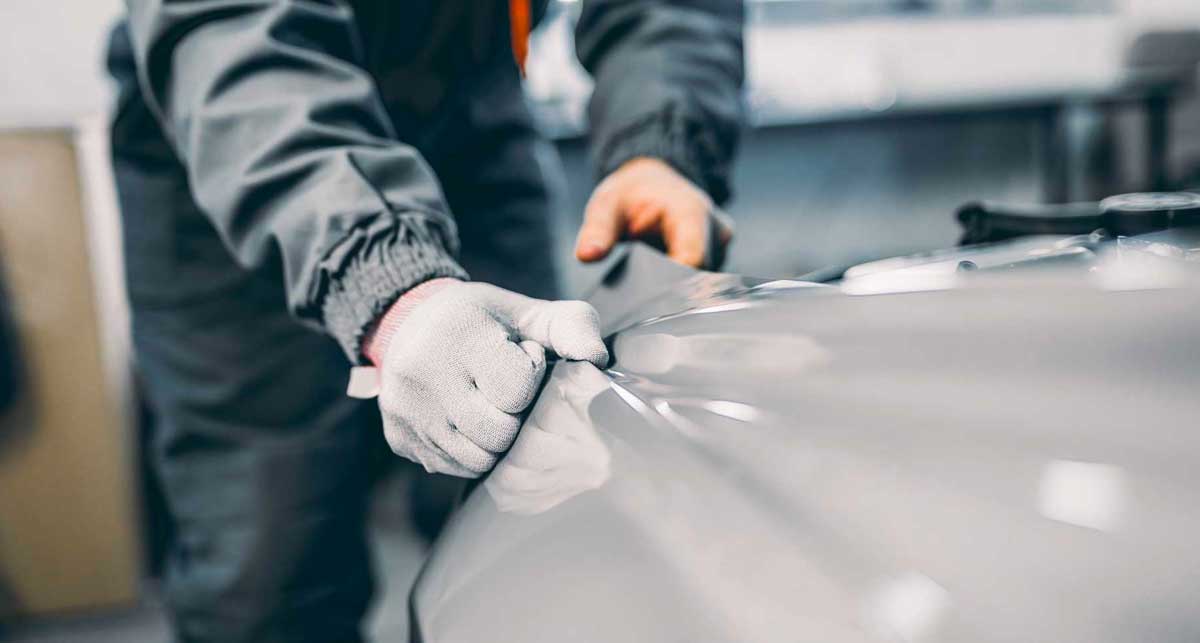
Manufacturers often use film to protect surfaces during shipping—especially for optically clear products.
When the protective film fails to adhere to the well plate as intended, it leaves areas exposed, resulting in:
- Scratches or haziness
- Loss of optical clarity (yellowing)
- Contaminated adhesive
3. HUMAN DNA CONTAMINATION
The last thing you want is for your well plate assemblies to be contaminated by DNA before they even reach their destination. For this reason, products such as well plates are often manufactured in sophisticated Clean Rooms.
A Clean Room is a specialized manufacturing environment with controlled humidity and particles. Machine operators within a Clean Room must also abide by gowning procedures to minimize human DNA contamination. These precautions greatly reduce the risk of product contamination.
At Strouse, we use an ISO-7 certified Clean Room, which circulates air that is about 100 times cleaner than that of an ordinary room, allowing us to build medical, optically clear, and other sensitive parts.
Advancing 96 Well Plate Automation — Assembly
Due to an ever-increasing global population (even in the face of hardships), and a post-COVID global surge of illnesses (viral and bacterial), there is a rapidly increasing need for point-of-care diagnostics.
To make well plates affordable enough to become widely used in clinics and doctors’ offices, manufacturers must develop cost-effective assembly methods.
These are the steps for assembling a 96-well plate.
1. GATHERING ASSEMBLY COMPONENTS
a) Making well plates (injection molding)
Well plates are made using injection molding, which allows for various shapes to be created using different materials.
Unfortunately, well plate companies may not offer your desired shape AND the adhesive features you need off the shelf. If you need a custom option, we recommend partnering with a smaller injection molding company who can help source your ideal plate shape and provide it to the converter for assembly.
b) Building adhesive and/or film (adhesive converting)
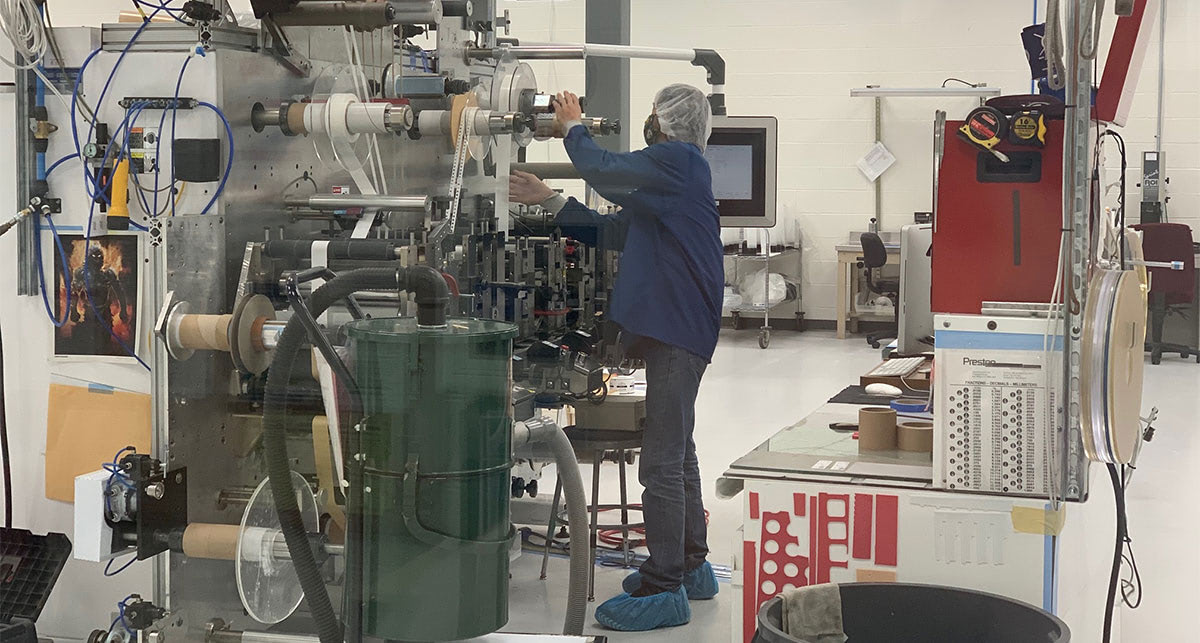
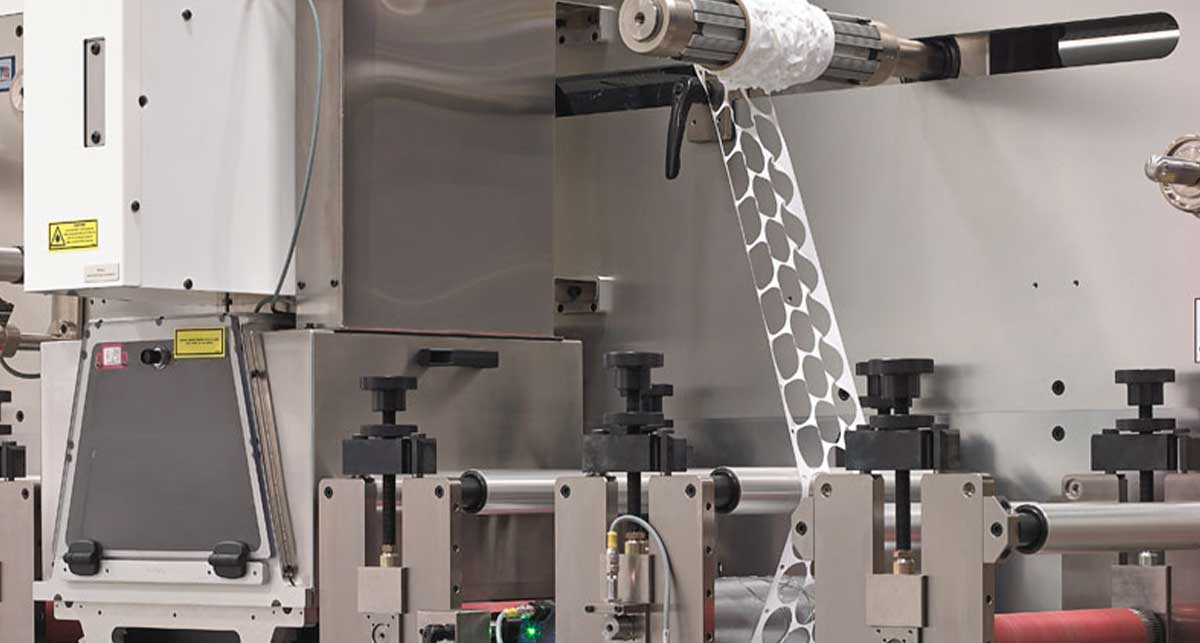
Adhesive and film components for well plates are often made by converters, who cut rolls of flexible material into custom designs.
Examples of well plate components include:
- Sealing films or foils
- Condensation rings
- Labels
- Flow channels
- Filter membranes
- Optical layers
- Conductive electrodes
—and more, depending on the design application.
Converters that leverage advanced technologies like servo-motor machine presses can create complex material stack-ups beyond the capabilities of injection-molding–focused manufacturers, who might lack the required expertise and equipment.
2. MECHANIZED ASSEMBLY
Once you have the well plate and its adhesive components, it’s time to assemble them.
For microtrays, mechanized assembly is a pick-and-place tray assembly, where a machine grabs the layers and stacks them on top of one another. At Strouse, we use cameras and neural-tracking technology to catch deviations in spacing and placement, ensuring consistent part quality.
2a) Tamping Process
What happens when you make a sandwich, but you forget to squish it all together? The bread falls apart, leaving you in tears, and possibly covered in peanut butter and jelly. As soon as the machine places the layers, it will apply gentle pressure to seal the well plate together.
3. INSPECTION SYSTEM
After the well plate layers are fixed in place, the only thing left to do is test for quality. Using neural-tracking technology, machine operators can quickly determine whether parts are in-spec. This modern quality inspection system will greatly reduce the number of defective products that reach a lab or clinic.
Where Can I Build Custom 96 Well Plates?
It depends on how you’re using 96-well plates.
➡️ If you just want trays, you should probably just reach out to an injection molding company.
➡️ If you want trays and parts, it’s more likely that a converter will be able to help.
➡️ And if you want all three, there are probably only a handful of companies that offer them fully-assembled, and one of them is Strouse.
WHY USE A CONVERTER FOR WELL PLATE ASSEMBLY?
Injection-molding-focused companies may not offer the materials, design complexity, or quality you want.
If you want more design flexibility, a converter can help you.
We’re not limited by which plate manufacturer we can incorporate, nor the type of plate, adhesive, or construction. Mix and match plates, adhesives, materials, and designs to create the perfect design for your product.

There’s no need to try to assemble everything in-house yourselves. Instead, start your project with Strouse today, and we’ll help make your assembly process run smoothly.
Special thanks to Lauren “Lars” Widelski for their insight into the use of 96-well plates in parasitology.